An electric car at a US auction is checked differently from a petrol one: the main risks are under the floor and in the connectors, not in the body. Below: what to check in a lot before bidding, how the US port differs from Ukrainian charging stations, how customs clearance works in 2026 and when it is better to walk away from a lot.
The battery: its case and remaining capacity
The traction battery sits under the cabin floor. A hit from below or driving over an obstacle can bend the case or its mounts, even if the body above looks almost intact. In the photos we look for dents and scratches on the bottom panel, torn-off shielding and scrape marks; a side impact can also reach the battery through the sill.
The charge percentage on the screen says nothing about the battery’s health. What matters is the SOH — the remaining capacity — plus battery management errors and the voltage spread between cells. Auctions rarely provide these data, so without diagnostics the battery is an unknown, and the budget needs a margin for it.
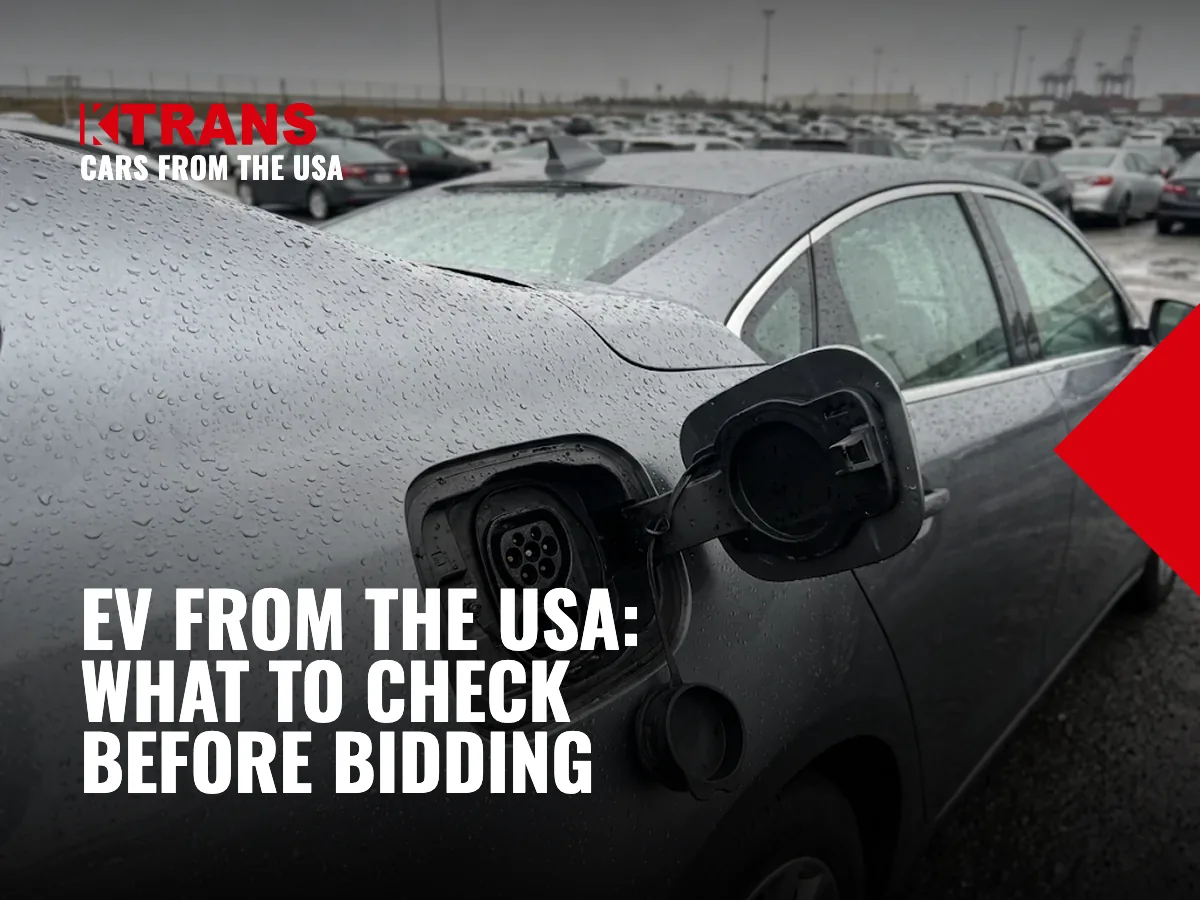
The charging port and connector standard
The port often suffers in a front or rear impact, depending on the model. In the photos we check the flap, the port housing, the contacts and the plug latch: corroded contacts or green deposits point to water, not only to a hit.
The second thing is the standard. US electric cars have J1772 and CCS1 ports, Tesla has its own NACS, while stations in Ukraine are mostly Type 2 and CCS2. So charging needs adapters or a port replacement — worth budgeting for before the bid.
Water traces: the most expensive unknown
In an electric car water is dangerous not only because of corrosion: it reaches the inverter, the on-board charger, the control units and the battery case. The car can be dried out and may even drive, while faults appear months later. In the photos we look for:
A Flood or Water note in any field of an electric car’s lot is a reason to walk away: the repair cannot be costed in advance. What title brands mean is covered in salvage, rebuilt and flood titles.
EV customs clearance in 2026
Duty is 0%, excise is 1 € per kWh of battery capacity, with no age coefficient. Since 1 January 2026 electric cars pay 20% VAT — and it is now the main part of the payment.
Turnkey calculations for the Tesla Model 3, Model Y and BMW i4 at today’s rates are on the electric cars from the USA page, and the general formula is in what customs clearance consists of.
VIN history and warranty
The VIN history shows past insurance claims, mileage and photos from earlier sales. If the damage changed over time — first a crash, then water — it is a different lot and has to be costed differently.
A factory battery warranty valid in the USA mostly does not apply in Ukraine — we do not count on it in the budget.
When to walk away from a lot
You can send a lot for a check before bidding on the auctions page, and how to read a lot description in general is in how to check an auction car before bidding.
Cars from the USA already in Ukraine
FAQ
How do I check the battery of an electric car from a US auction?
From the photos — the case and underbody; from the description — dashboard warnings and Run and Drive. Only diagnostics show the remaining capacity, so without them we keep a battery margin in the budget.
Can a US electric car be charged in Ukraine?
Yes, but its port is J1772 and CCS1, or NACS on a Tesla, while stations are mostly Type 2 and CCS2. It needs adapters or a port replacement.
How much is customs clearance for an electric car in 2026?
Duty 0%, excise 1 € per kWh of battery, VAT 20% of the customs value plus the excise. For a Chevrolet Bolt with a 66 kWh battery the excise is 66 €.
Is it worth buying an electric car after a flood?
No: water reaches the inverter, the charger and the battery, and faults appear months later. The cost of such a repair cannot be estimated in advance.
Does a US battery warranty apply in Ukraine?
Mostly not, so we do not count on it in the budget.