Car auctions in the USA: how buying works and what you can find there
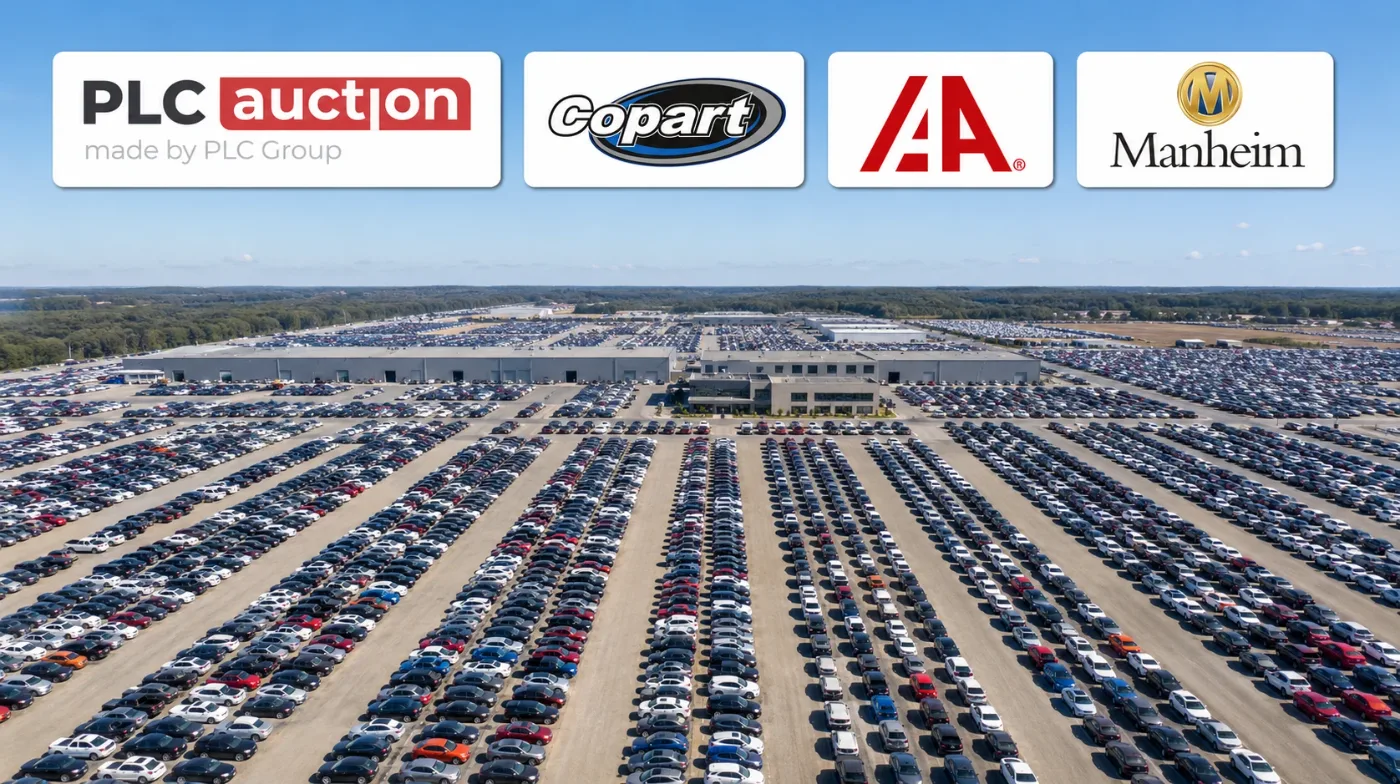
A US auction is not a car dealership. There is no price tag, no salesperson behind a counter and no chance to haggle after the purchase. There is a lot number, a dozen photos, a few lines about the condition and the day when the car will be auctioned. The price appears in the last seconds of bidding — and that is exactly why some people bring a car home noticeably cheaper than on the Ukrainian market, while others overpay and then cannot sell it for a long time.
Below is how the process works, without embellishment: where the cars come from, how the types of auctions differ, who is allowed to bid at all and what begins after your bid turns out to be the highest.
Where cars at US auctions come from
The main flow of lots available to a buyer from Ukraine comes from insurance companies. The logic is simple: after a crash, hail, flooding or a fire, the insurer calculates the repair at US labor rates and original parts prices. If the repair costs more than a reasonable share of the car’s value, the company pays the owner and takes the car. Then it needs to recover at least part of the money — and the car goes to auction.
But insurance cases are not the only source. Auction yards also receive:
That is why an “auction car” and a “wrecked car” are not the same thing. Some lots have no damage at all; their life cycle with the previous owner simply came to an end.
Insurance and dealer auctions: what is the difference
Roughly speaking, auctions fall into two types. Insurance auctions are Copart and IAAI, the best known to Ukrainian buyers: this is where most damaged vehicles end up, lots are listed publicly, and anyone can see the photos and description. The second type is dealer auctions such as Manheim or ADESA, which mostly receive undamaged cars after leasing and trade-in. Only companies with a dealer license can get in, and from the outside you cannot even see what is being sold.
Different auctions mean different price logic. At insurance auctions you pay for the risk and take on the repair. At dealer auctions the car is usually technically sound, but the bid on it also starts closer to the market. That is why “the price at a US auction” means nothing without specifying which auction it is and what condition the lot is in.
Who can bid and why you need a representative
A private individual from Ukraine cannot simply sign up and buy any lot. Access to a large share of cars is open only to those who hold the relevant license in a specific state, and at dealer auctions only to licensed dealers. On top of that, auction rules require a deposit, payment within a short time and a local carrier who will physically take the car away.
That is why the scheme includes a licensed representative. Their role is broader than “pressing a button”: they have access to closed lots, understand how much repairing this model will really cost and stop bidding where the benefit has already been eaten up. Healthy practice is when the bid limit is agreed with the buyer in advance, not “topped up” during the bidding.
How the bidding itself works
Every car has a lot number, a sale date and the yard where it physically stands. Before the auction day you can leave a preliminary bid — it simply records your limit. On the day of the sale the lot goes into live online bidding, and it gets literally a few dozen seconds: the system raises your bid automatically until it hits the maximum you set. Because of this, reaction speed decides almost nothing, while a correctly calculated limit decides everything.
An important detail: the highest bid does not always mean a purchase. The seller may set a minimum below which they will not sell the car — then the lot goes “on approval” and the answer comes later. Sometimes it is given the same day, sometimes the lot is put up for auction again. Another detail people often forget: the yard’s fees are added to your bid, and the budget has to be calculated together with them, not “by the figure on the screen”.
How to narrow the search down to a few lots
A beginner’s mistake is to look at everything and fall in love with the first good photo. It is more practical to filter out lots right away by the parameters that cost money later:
What a lot description says — and what it does not
The description is brief: the primary and secondary damage type, the type of the car’s document, the mileage status, whether there are keys and a mark showing whether the car started and moved at the yard during check-in. None of these lines should be read literally — for example, a mark saying the car started and drove a few meters is not a conclusion about the condition of the engine or transmission.
This is the most delicate part of the whole story, so we cover photos, damage codes, titles and mileage statuses in a separate article — how to read the condition of an auction car. The minimum that must be done before a serious bid, regardless of the description: a VIN history check and a calculated turnkey budget, not just the bid.
What is worth attention at an auction and what is better to skip
The most predictable benefit comes from recent cars with low mileage and localized damage: a front or rear impact, hail. The repair can be calculated fairly accurately, and the difference from the price of the same car in Ukraine is often worth the trouble. Cars recovered after theft can also be interesting if the interior is intact.
The difficult categories are water, fire, damaged body geometry and electric cars with an impact in the battery area. There the repair cost is unpredictable, and sometimes the repair is simply impossible within a reasonable time because of parts. Why this is so and what signs show it already in the lot is also in the article about reading the condition.
What happens after the lot is won
Then the calendar starts. The yard gives limited time to pay and to pick up the car, after which it charges a storage fee. Then comes the trip to the port, the ship, a European port, a car carrier to Kyiv, customs and registration. Each step has its own range, and where exactly the weeks of waiting hide is covered in the article about delivery.
At the bidding stage only one thing matters out of all this: the money has to be ready before the bid, not after it. A late payment eats up the benefit faster than any mistake in estimating the repair.
An auction rewards not speed but preparation: the winner is the one who knows their limit before the bidding starts and does not move it. If you are looking at a specific model, send us the lots you like, and we will look together at where a bid still makes sense and where the benefit has already run out. Cars we have already imported stand at our yard in Kyiv — you can come and see what the result looks like.