Ordering a car from the USA at the end of summer: why September is a good time

August is coming to an end, and the question “when should I order a car” stops being abstract. Between “I have decided” and “I am driving it” there is not a purchase but a chain: paying for the lot, the title, the trip across the USA, the ocean, the port, customs, registration. Each link takes its own time no matter how quickly you made the decision.
That is why the order date matters more than the purchase date. Whoever names the make and budget at the end of August goes through the whole chain in the fall. Whoever waits “for better times” goes through it in winter, when Atlantic storms and port queues are added to the usual timelines.
The timeline math: what can happen before the cold weather
Nobody can give you an exact date, and we have already written about this separately. But the order of the stages never changes, and it is exactly what shows where the time goes.
What has to be closed between the bid and the license plates:
None of these links can be skipped with money. They can only be started earlier. That is why “I will order closer to winter” in practice means “I will be driving it in spring”.
Another thing worth calculating in advance is where the lot is. A car at a yard an hour’s drive from the port and a car from the middle of the continent start from the same bid, but not from the same timeline. We check the state where the car stands before the bidding — together with you, not after the fact.
The end of summer at US auctions: the model year changeover
In the USA the model year changes right at the turn of summer and fall: new cars go to dealers, and dealerships make room for them. At the same time, lease contracts signed three years ago come to an end, and those cars are returned to dealers.
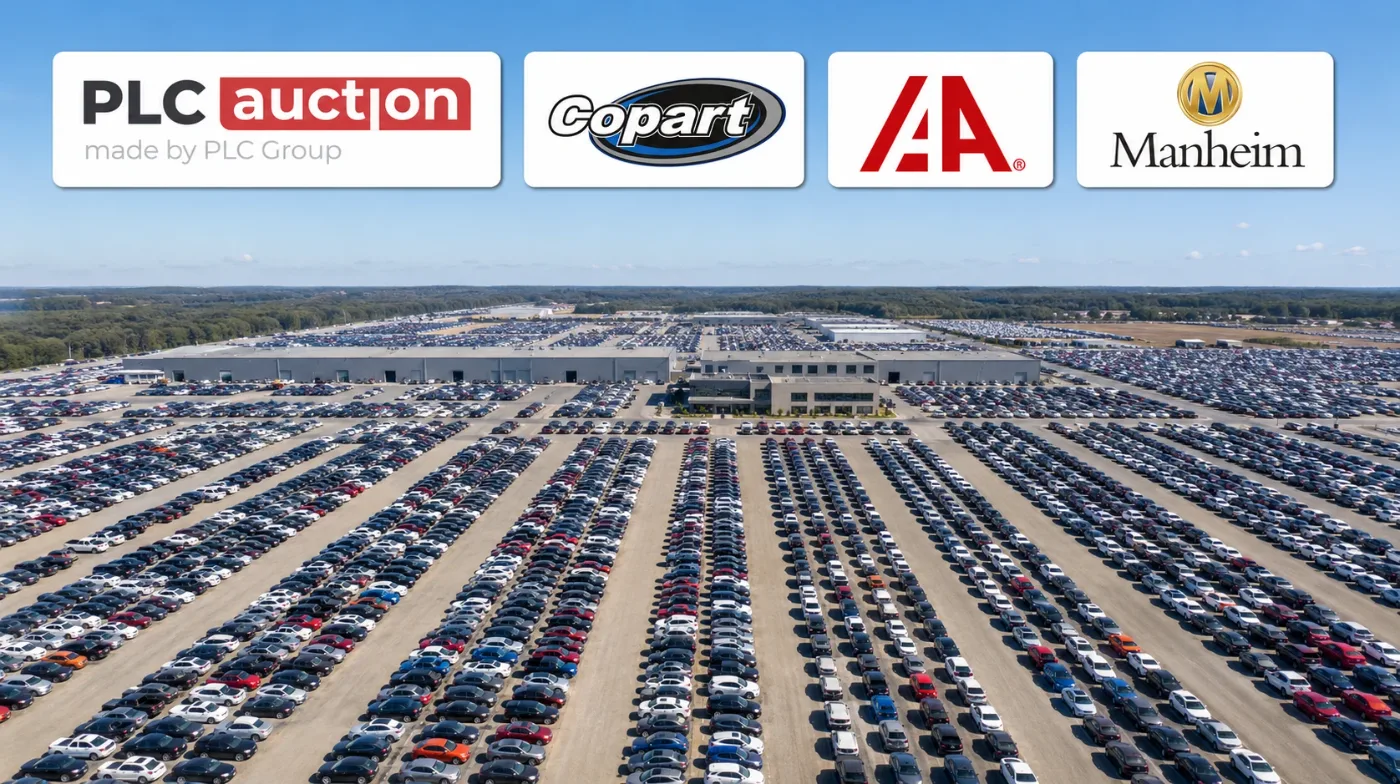
These cars do not disappear — they go to dealer auctions, Manheim and Impact Auto Auctions. These are not insurance auctions with damaged lots: this is where cars come after leasing and trade-in, with scheduled maintenance and a clear history.
This is a market pattern, not a promise of a discount: the specific price of a specific lot depends on the lot itself. But when there is more movement at the auctions, there is also more choice for a specific request — and choice is exactly what people come to us for.
The practical conclusion is simple: if you need a specific model in a specific trim, at the end of summer the chance of finding exactly that car is higher than in January. And this is a case where waiting makes no sense — the next window like this opens in a year.
Hurricane season: why lot descriptions are read twice as carefully right now
There is also a flip side to the end of summer. The Atlantic hurricane season runs from June to the end of November, and its peak falls right on August–October. After every big storm, a wave of cars with water in the cabin arrives at insurance auctions.
From the outside, such a car can look flawless. Its problems are not in the body but in the electrics, the connectors and corrosion in places nobody looks: they do not show up right away but half a year later — and they stay forever. This is the kind of purchase that cannot be “finished on site”.
It can be recognized before the bid — by the damage type in the lot description, by the title type and by where the car physically came from. We check every lot before placing a bid, and we turn down some lots ourselves. In the fall this is not a formality but the main part of the work.
What we look at in a lot description in the fall:
The money has to be ready before the bidding, not after
The auction does not wait. Win a lot, and you have a limited window to pay; a delay eats up all the benefit through paid storage. That is why the budget is calculated before the bid, and calculated not “for the car” but for the car together with delivery and customs payments.
Import duty, excise tax and VAT are not a small tail of the amount, and for an electric car they are calculated under different rules than for a gasoline car. You can calculate them for a specific lot yourself, using the same formula customs uses.
And one more thing about money that applies to the fall in particular. Nobody locks in the exchange rate, the freight rate or the storage cost in advance, so the longer the gap between the decision and the bid, the more variables have time to shift. An order that starts now goes through fewer such shifts than an order that starts in December.
And if you do not want to wait at all
Some cars are already at our yard in Kyiv: customs-cleared, with documents, ready for inspection and a test drive. There are no delivery times and no currency swings — the price is final, and you can take the car this week.
This is an honest alternative to ordering, not a “worse option”. The only difference is that when you order, you choose the trim yourself, and from stock you choose from what has already arrived.
Where to start
Three things are enough: the make and model, a turnkey budget and the date by which you need the car. Then we look for lots that match your request, show them to you with photos, video and a check, and set the limit together.
We do not ask you to pay the full amount up front: payment goes in stages, and you do not pay for parking at the port. If you need an installment plan, we agree on that at the start too, not after the car has already arrived.
If you need the car this fall and not next spring, the countdown starts with a conversation, not with the bidding.