How long it takes a car to get from the USA to Ukraine: delivery stages and what affects the timeline

Nobody can give you an exact date, and that is not an excuse. Delivering a car from the USA is a chain of stages: paying for the lot, the title, pickup from the yard, the trip to the port, loading, the ocean, a European port, delivery to Ukraine, customs clearance, registration. Each stage has its own range, and they do not add up in a straight line: some run in parallel, some wait for each other. Two similar cars bought on the same day at the same auction can really arrive a month apart — because of different states, different distances to the port and different timelines with the title.
That is why a normal answer sounds roughly like this: “for this car, from this state, through this port — roughly so many weeks, and here is where the timeline may slip”. Below is a breakdown by stage, so you can see where exactly it slips.
Payment and title: where the countdown starts
After a lot is won, the auction issues an invoice and gives a limited window to pay. Miss it, and paid storage begins; it adds up every day and eats all the benefit of a good bid. That is why the money has to be ready before the bidding, not after it.
In parallel there is the matter of the title — the document of ownership. The auction does not always have it on hand at the moment of sale: sometimes the title is still in the mail from the insurer or the previous owner. Without the title the car will physically not be allowed to leave the country. This is the least predictable part of the whole process and the most common reason why a car is “standing still” although it was paid for long ago.
What has to be closed at this step:
Pickup from the auction and logistics within the USA
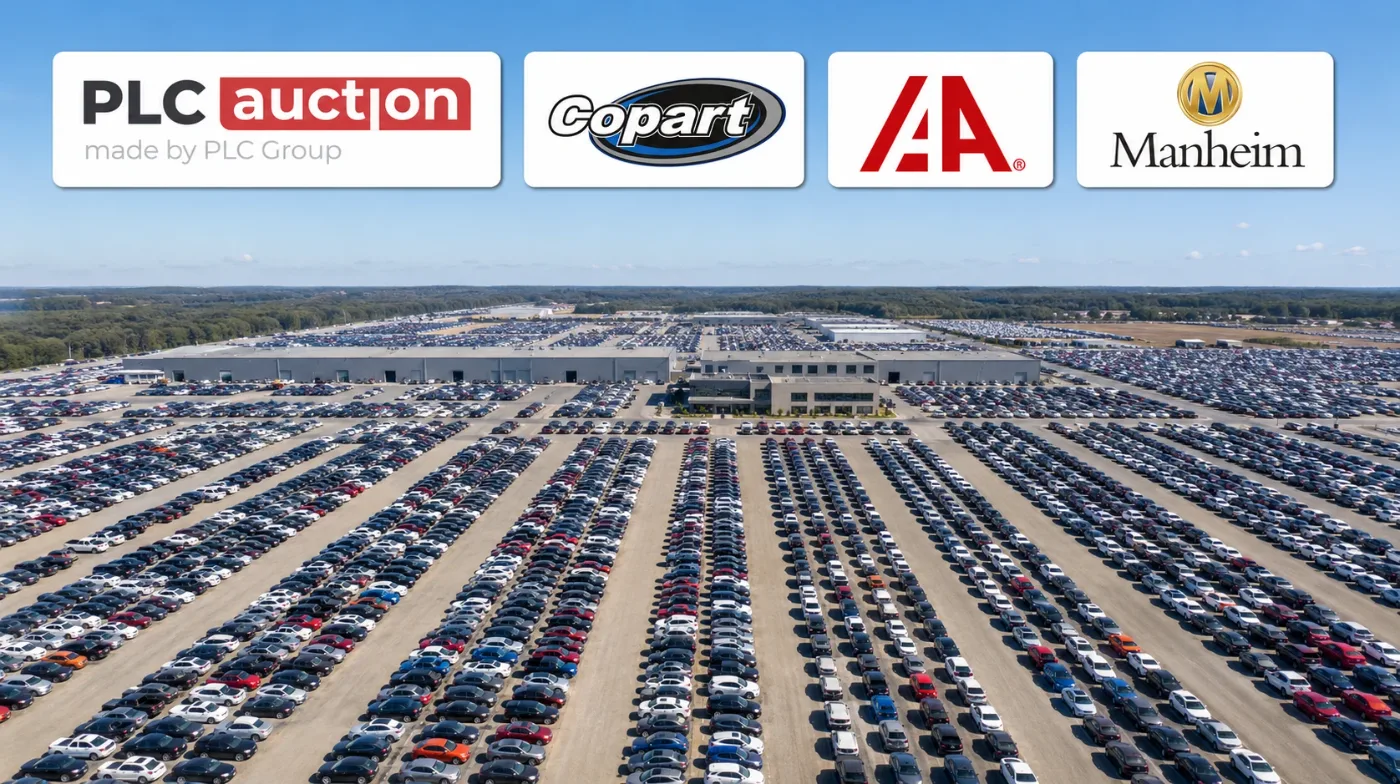
After payment, a tow truck or a car carrier comes for the car. From here, geography decides. A car at a yard an hour’s drive from the port is fast. A car from the middle of the country or from the West Coast travels across the continent, and this leg alone can take as much time as the ocean. That is why the state where the lot is located is worth checking before the bid: it affects both the timeline and the final amount.
At the warehouse near the port the car is received, inspected, photographed and put in line for loading. Cars that cannot move — with damaged running gear, without a key, without brakes — are loaded with separate equipment, and that always takes longer.
Container or ro-ro: how a car gets onto the ship
There are two ways. In a container the car is secured inside, usually several cars per container. It is closed and safe, but the container has to fill up: if your car arrived at the port first, it waits for its “neighbors”. Ro-ro is a specialized ship onto which the car drives under its own power and stands on deck. There is no need to wait for consolidation, but you need a car that runs and a scheduled sailing.
There is another point that often drops out of calculations: the car has to be at the port well before the ship departs, because US customs requires export data to be filed in advance. Arrive at the last minute, and the car goes on the next sailing, not this one. The difference here is not days but a whole sailing.
The ocean and the European port
The sea leg is the most predictable part of the route, because ships run on a schedule. But the schedule itself depends on the port of loading: from the East Coast to Europe is closer than from the West Coast, and the difference is noticeable. What nobody can influence is the weather in storm season, a change of route or a delay at an intermediate port.
At the European port the container is unloaded, the car is taken out and transit documents are prepared. There can be a queue here too, especially when several ships arrive at the same time.
The road to Ukraine, customs clearance and registration
From the port the car is taken by car carrier to the border and then to customs. Customs clearance is not a fixed number of days but as long as it takes for the documents to match: the invoice, the bill of lading, the title, the technical data. One mismatch, and the process waits for clarification.
The payments themselves do not affect the timeline, but they need to be calculated before the bidding, not after: how import duty, excise tax and VAT are calculated is covered in a separate article about customs clearance. Then, if needed, comes certification, followed by registration at the MIA service center and the license plates. If the car is put straight into the new owner’s name, some steps are done without an intermediate re-registration.
What really shifts the timeline
The first three points are covered by preparation: money ready, a checked lot, a clear route before the bid. The rest are external circumstances. It is better to warn about them honestly at the start than to explain later why “you promised it would be faster”.
How not to be left without information while the car is in transit
The most unpleasant part of waiting is not the time itself but the silence. The good news is that every stage leaves a document or a status that shows movement: the invoice and payment confirmation, the title, the pickup order from the yard, check-in at the warehouse near the port, the booking and container number, the bill of lading after the ship departs, arrival at the port of destination, transit documents.
A practical rule: ask not “when will it be here” but “which stage was closed last”. The answer to the second question always exists, and it already shows whether the process is moving or stuck somewhere.
The timeline is the only thing in car import that cannot be bought in advance: it can only be forecast honestly and kept under control at every step. KTrans imports cars from US auctions and shows the car’s progress stage by stage — from paying for the lot to the license plates. If it is important for you to meet a specific date, tell us at the start: before the bid it will already be clear whether it is realistic with this state and this port, or whether it is wiser to look at lots closer to the coast.